
Olga is a 2-year-old English Setter. She has a fever, and blood tests reveal anemia and moderate thrombocytopenia, as well as monocytosis. She also has jaundice.
The presence of anemia, combined with thrombocytopenia, jaundice, and monocytosis—especially in a dog with a fever—are warning signs of babesiosis.
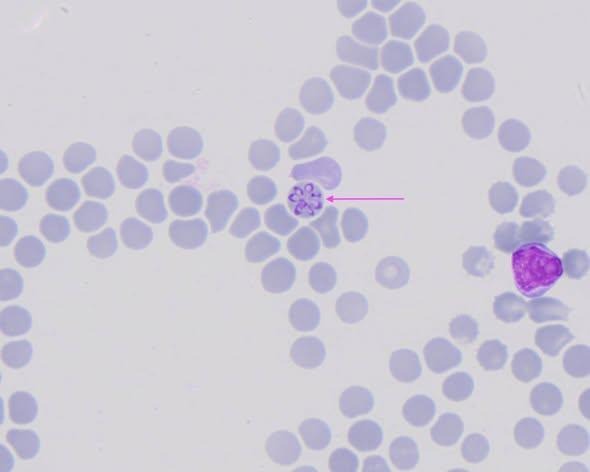
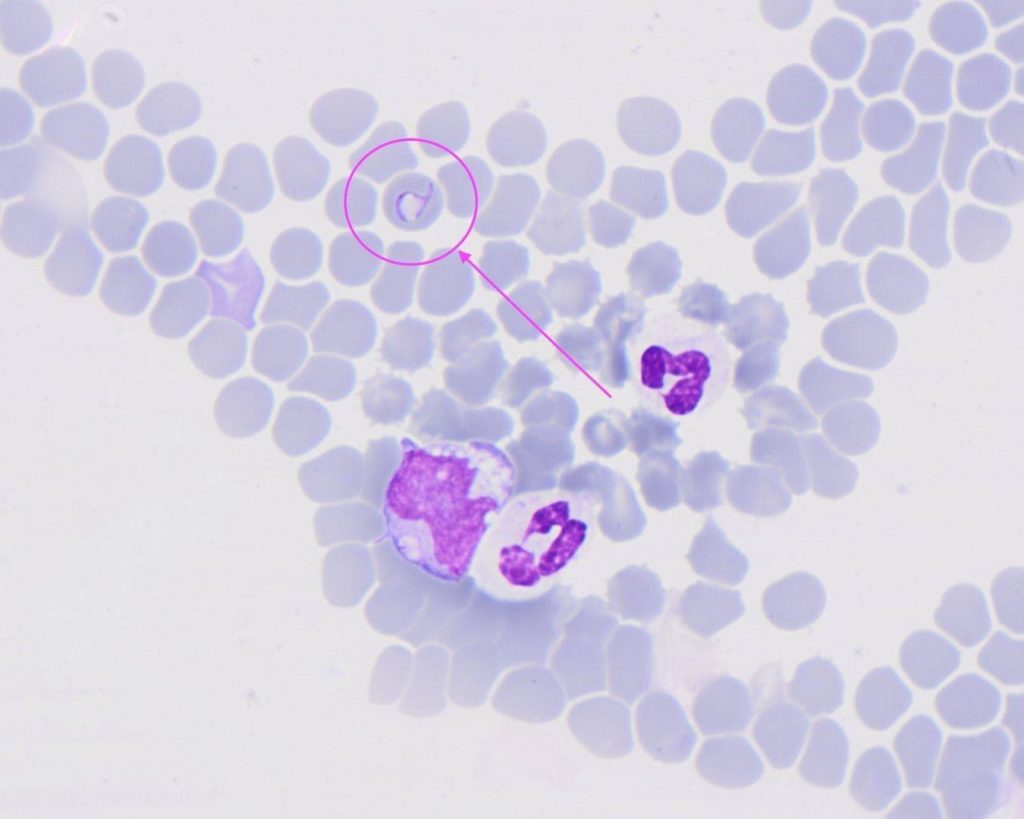
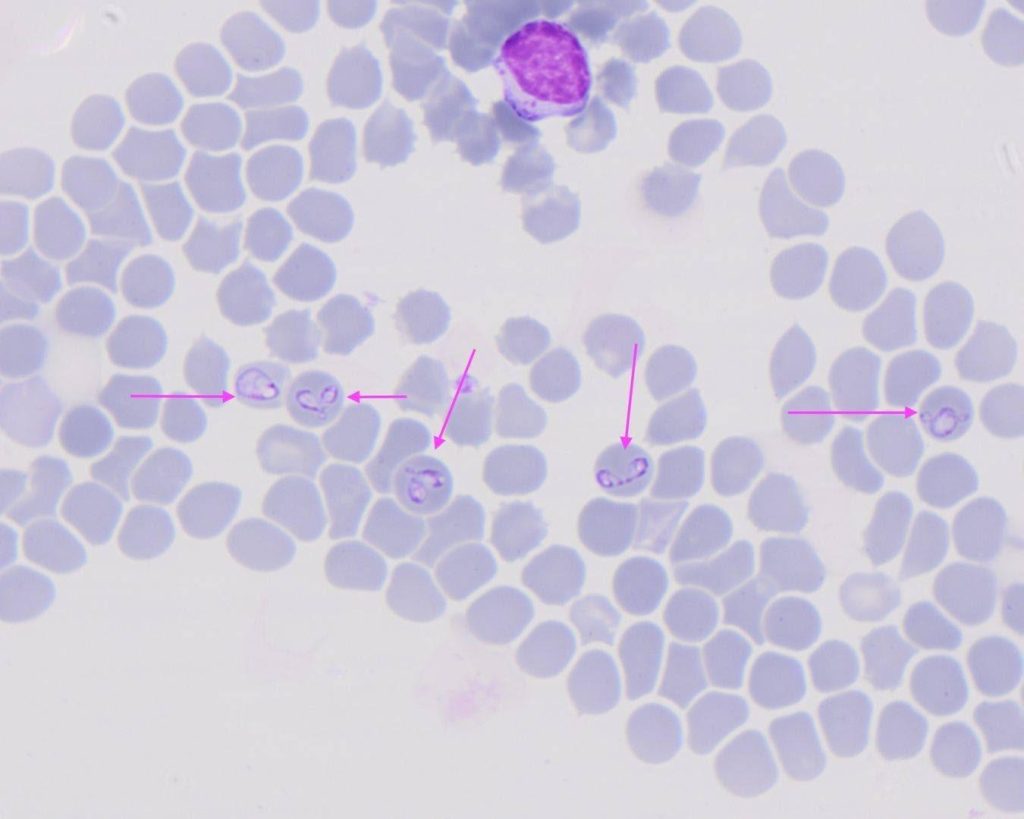
A blood smear is performed. The first thing that stands out at low magnification is the highly activated, “macrophagic” appearance of the monocytes. At high magnification, at the tail end of the smear, numerous refractile microorganisms are found within the red blood cells, measuring 2–3 µm in diameter and typical of large Babesia, sometimes with striking rosette formations.
The rest of the biochemical panel reveals normal liver enzyme activity, which supports the suspicion of pre-hepatic jaundice, linked to hemolysis. In our dog, the anemia is recent, and the reticulocyte count has not yet had time to rise: it takes several days for regeneration to begin, typically 48–72 hours.
It is worth noting that thrombocytopenia is almost always present in cases of babesiosis. Sometimes it is the only abnormality in the blood count. Thrombocytopenia sometimes even precedes anemia. The mechanisms are still poorly understood, but a multifactorial component—including microthrombi, increased splenic sequestration, and an immune-mediated component—is suspected. Conversely, it is exceptionally rare for a dog with babesiosis to lack thrombocytopenia.
Learn more: A review of canine babesiosis: the European perspective, 2016.