
Clinical Presentation
A 6-month-old neutered male European cat was brought in for hyperthermia and lethargy. The physical examination revealed polyadenomegaly. He tested negative for FIV/FeLV. Fine-needle aspirations of the prescapular and popliteal lymph nodes were performed.
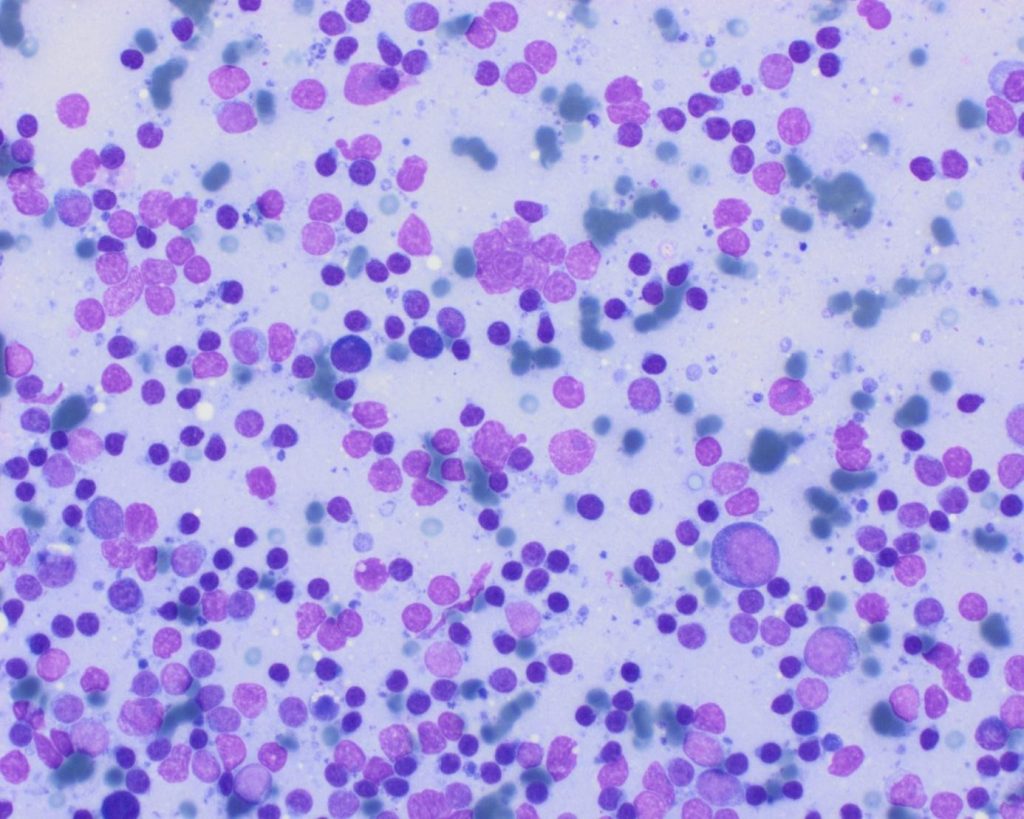
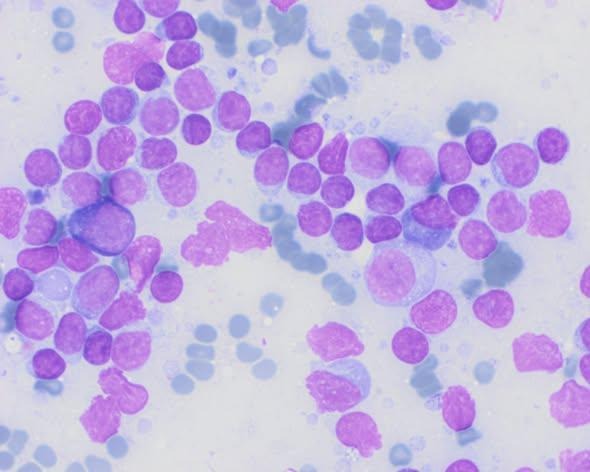
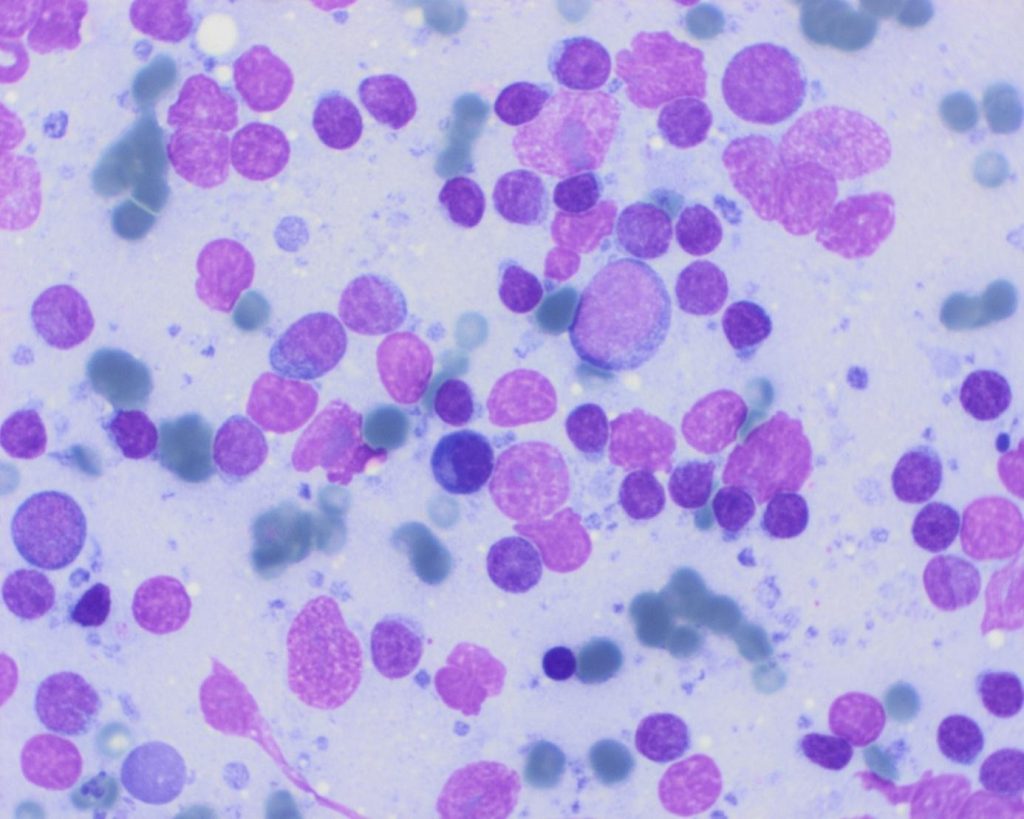
Cytology revealed a mixed lymphoid cell population, clearly dominated by small mature lymphocytes. Occasional medium- to large-sized lymphocytes and plasma cells were also noted, as well as rare non-degenerated neutrophils, well-differentiated mast cells, and macrophages.
Idiopathic polyadenomegaly in young cats is a condition rarely described in the literature but is nevertheless relatively common. It primarily affects cats aged 6 months to 2 years. While the clinical presentation is highly suggestive of lymphoma, the cytology is typical of a reactive lymph node. Cytological examination is particularly important here, as lymphomas can also occur in young cats. In the absence of an identified cause (FeLV, FIV, FIP, etc.), the hyperplasia is termed idiopathic.
The prognosis is good. Adenomegaly generally resolves within a few weeks. In cases of anorexia or marked hyperthermia, the initiation of corticosteroid therapy may be recommended on a case-by-case basis.
Further reading
- Moore FM et al. Distinctive peripheral lymph node hyperplasia of young cats. Vet. Pathol. 1986;23:386-391.
- Serres F. Polyadenomegaly in a young cat. Le Point Vétérinaire expert canin No. 380, November 1, 2017.