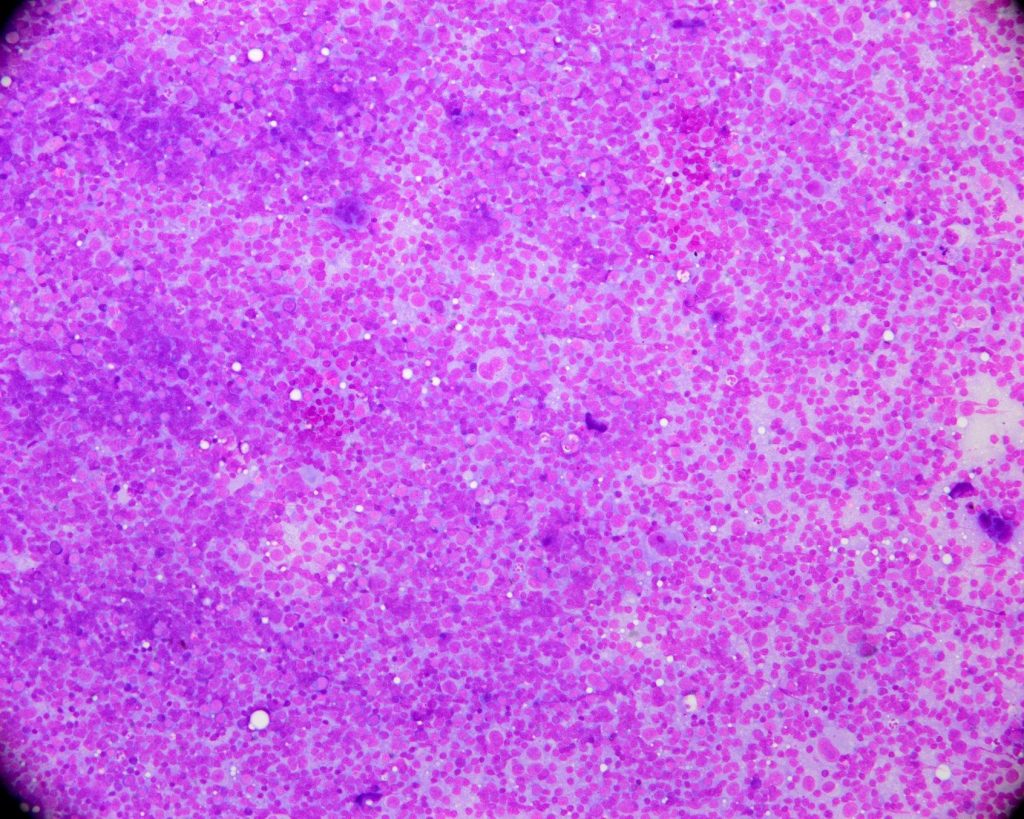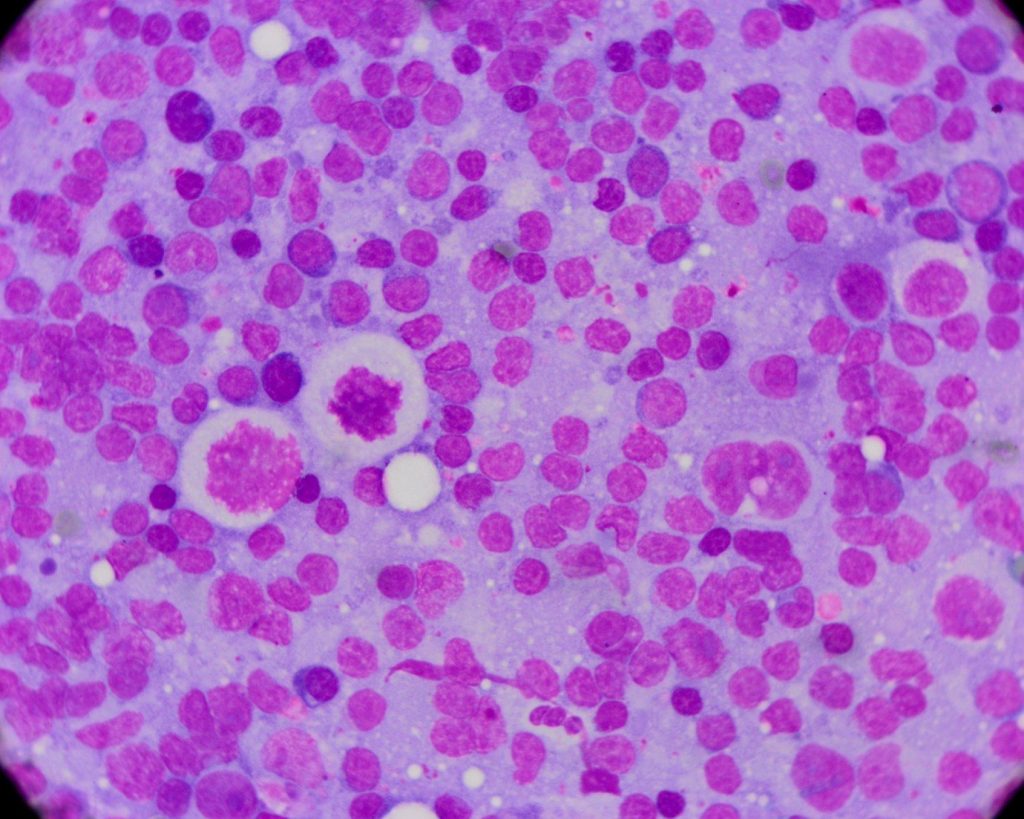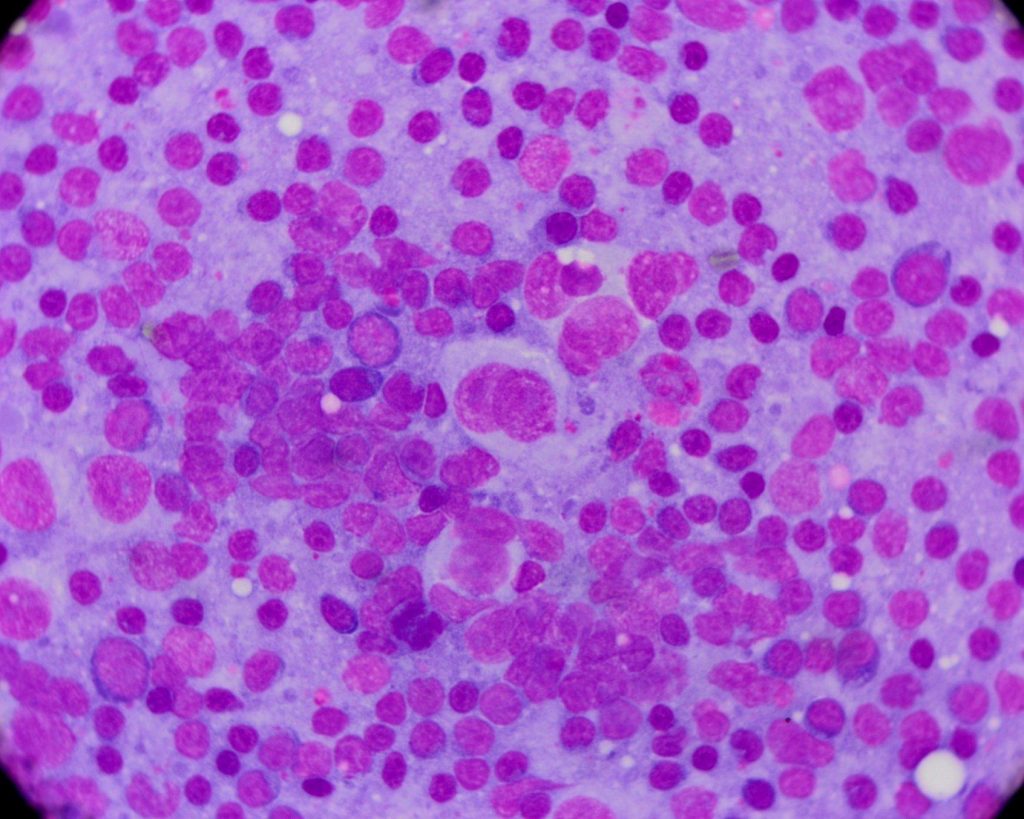

Hodgkin’s lymphoma is a relatively rare form of lymphoma in veterinary medicine, primarily affecting older cats and the lymph nodes in the neck and chest regions. Diagnosis is confirmed by histopathological examination of the entire lymph node. The prognosis is reportedly more favorable than in the case of classical lymphoma: life expectancies ranging from 7 months to 4 years without treatment have been reported.
This type of lymphoma is characterized by a majority of small non-lymphomatous cells, with sometimes less than 5% lymphomatous cells. The latter are typically large, histiocytoid cells. The large, binucleated, and macronucleated cells are called “Reed-Sternberg” cells. Although they are not pathognomonic nor systematically present, they are characteristic of Hodgkin lymphoma, and their observation contributes significantly to the diagnosis.